

I didn't grow up in the 90s. "Mixtape" still destroyed me.
The trouble with hello is goodbye.

Note: you don’t have to, but I recommend reading this article while you listen to Atmosphere by Joy Division. Just take my word for it.
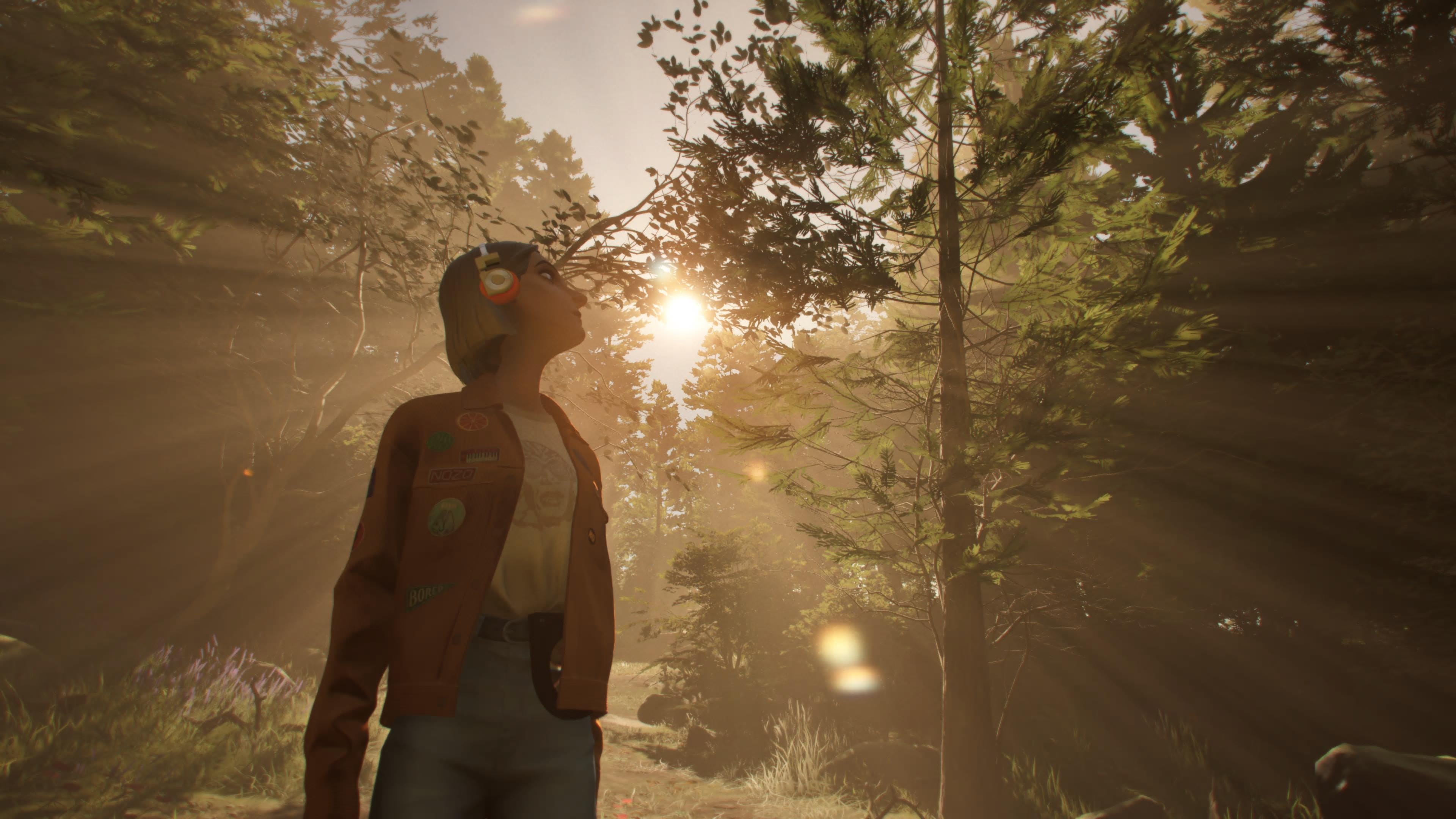
I’ve always been terrible at goodbyes.
Something tightens in my chest the moment I sense an ending approaching, even when I know it isn’t really an ending, even when I know I’m going to see this person tomorrow, even when the goodbye is the kind that functions as a formality. It still hits me. Something in me registers every parting as a small loss, as my soul letting out a small cry of desperation.
So when I found out that Mixtape, the new game from Annapurna Interactive and the Melbourne studio Beethoven and Dinosaur, was about three teenagers spending their last day together before life scattered them in different directions, I already knew. I knew it was going to find me somewhere unguarded and stay there.

Most of the discussions I’ve seen about this game fight a debate that I think misses the point entirely: whether Mixtape qualifies as a “real” game. Whether its light interactivity justifies its existence as a playable thing rather than just an animated film. The people making this criticism are asking a question the game was never trying to answer.
What caught me first about this game was the feeling (or if you’re of a younger generation, the vibes). The one that settled into me somewhere during the first hour and hasn’t fully left. Mixtape is set in the 90s, which is not my decade, not my teenage years, not my cultural context in any direct way.
And yet… there is something about the texture of it, the particular weight of knowing that something good is ending before you’re ready, that transcends the era completely. You don’t need to have grown up with cassette tapes or discmans to understand what it feels like to be seventeen and terrified that the version of your life you’ve come to love is about to change shape permanently.
I’ve felt that, more than once. And Mixtape brought it back with a precision that surprised me.
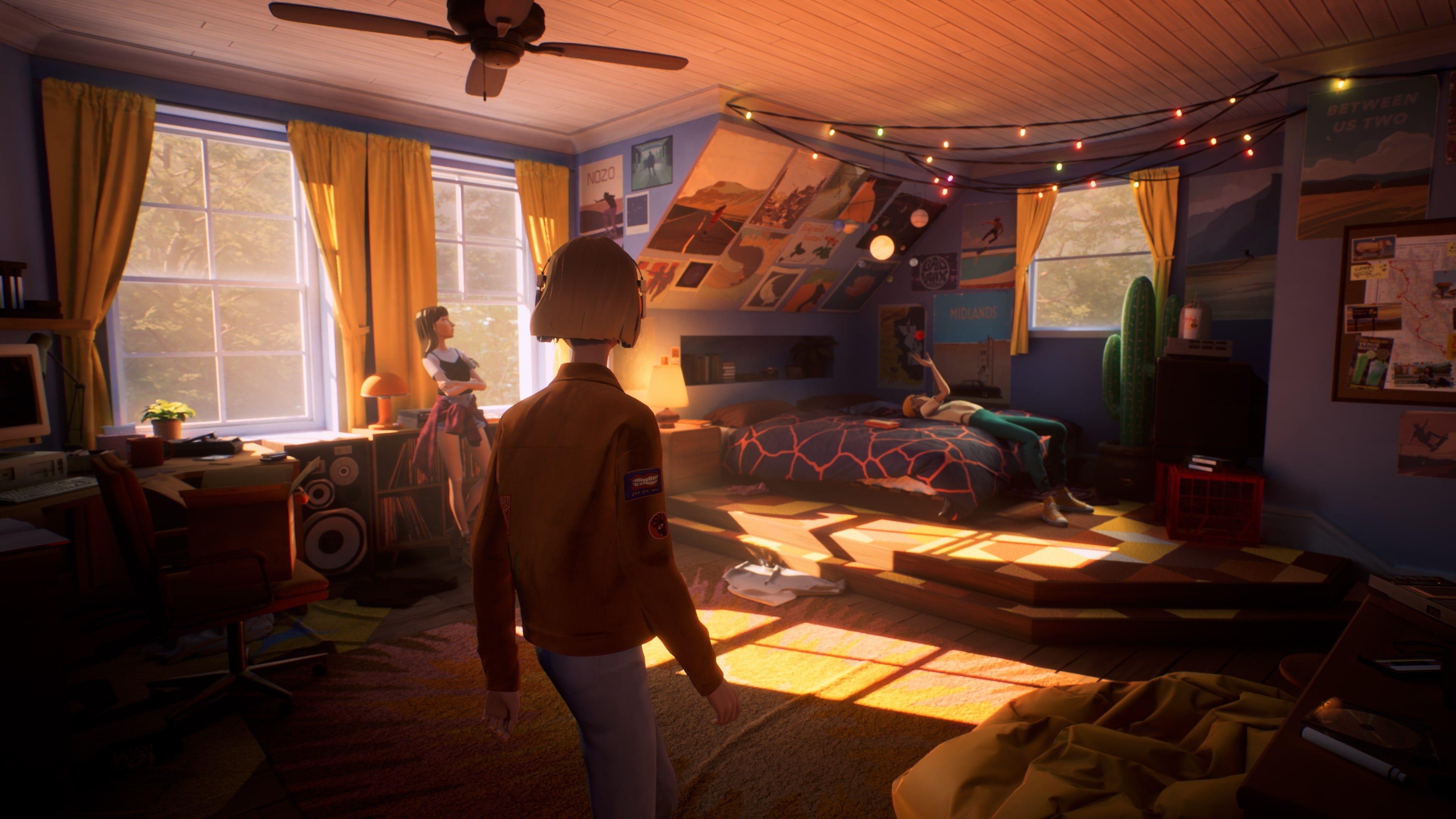
The game follows three teenage friends across a single day in the 90s. Stacy Rockford, the protagonist, is leaving for New York the next day to pursue her lifelong dream of becoming a music supervisor. The three of them have decided to spend what remains of the time going down memory lane, with Stacy having her very own mixtape ready, with every track thought out as the perfect soundtrack for the occasion.
The chosen soundtrack is one of the best I have listened to in quite a while, full of underground gems from the 80s and 90s that eschew explicit meaning and prioritize atmosphere.
The game sounds simple, and it earns every emotional beat it reaches for precisely because it doesn’t overcomplicate the premise.
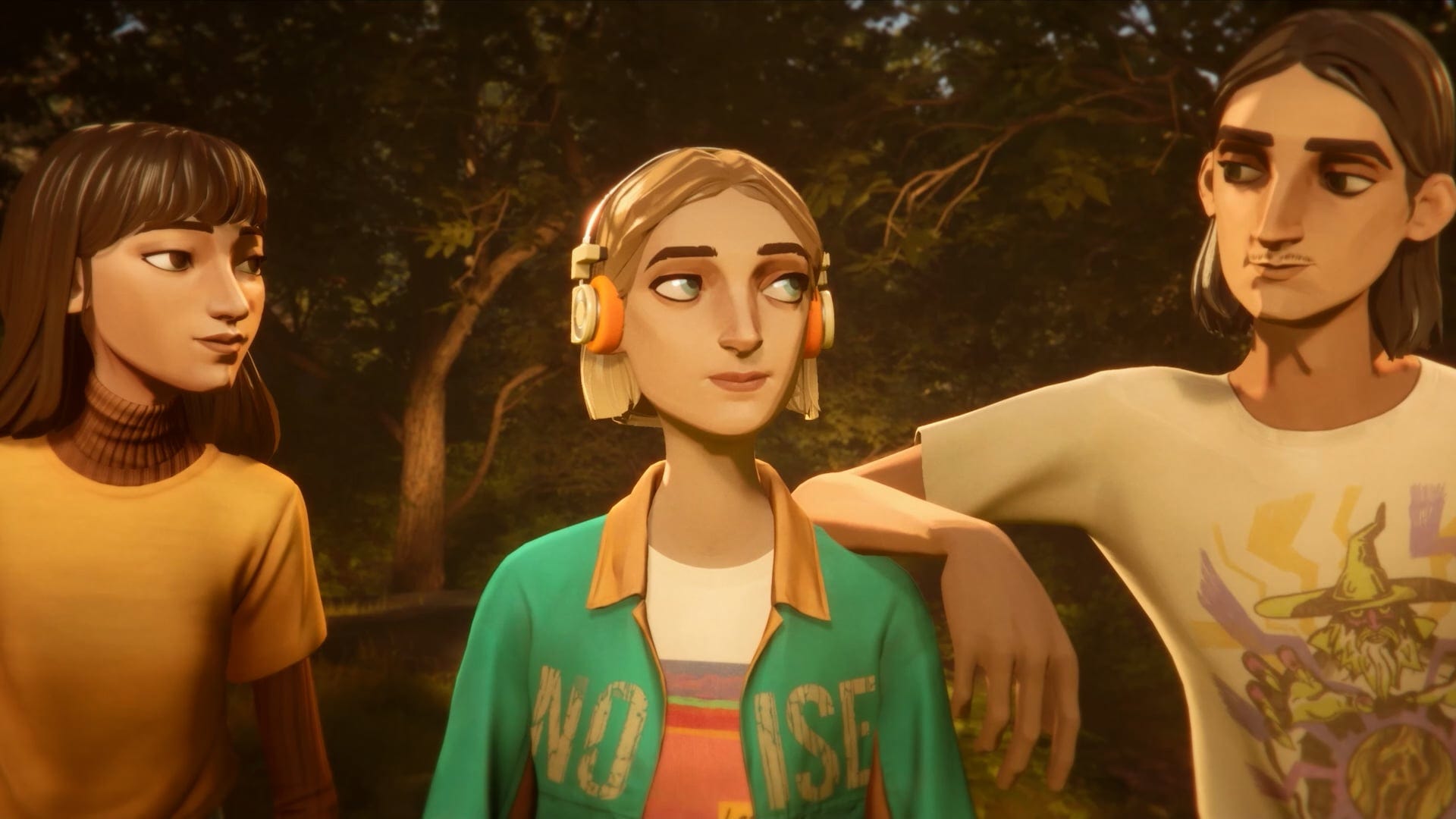
This is where the interactivity debate becomes interesting to me. Yes, the animation style would translate beautifully to a Netflix film. Yes, the “gameplay” asks very little of you mechanically. But the people saying this would be better off as a passive experience are, I think, fundamentally misunderstanding what it means to participate in a memory.
When you’re playing Mixtape, you’re not controlling a character through obstacles. You’re inhabiting a perspective. You’re the one choosing where to walk, what to linger on, when to press play on a song. The developers knew that most of us haven’t lived this exact story. We didn’t grow up in suburban America in the 90s, we don’t have a cassette tape with songs chosen in a specific order, we don’t have that specific night.
So they gave us the next best thing: a way to be present for it anyway. Not to watch it happen to someone else, but to feel like we were there, building it ourselves.
Look, I’ve played games that gave me complete control and left me feeling nothing. I’ve watched films that gave me no control at all and destroyed me. The question of how much “gameplay” something has is almost always the wrong question.
The right question is whether the experience earns its form. Mixtape earns it.
It also has me thinking about things I wasn’t expecting to think about.
The decisions I’ve made over the years about who to keep close and who to let drift. The relationships I’ve prioritized and the ones I quietly let expire. Whether I made the right calls. Whether the people I’ve said goodbye to, the real ones, the ones that mattered, knew that I meant it when I said it.
I’m in a strange season right now. Hypersensitive in ways I can’t entirely explain. Something about where I am in my life, something about this particular window of time, made Mixtape land on me with more weight than it might have at another moment. That’s not the game’s fault and it’s not a weakness in my reading of it. It’s just the truth. The best art doesn’t arrive in a vacuum. It arrives when you need it to, or it arrives and you didn’t know you needed it until it was already too late to be neutral about it.
This one arrived at the right moment.
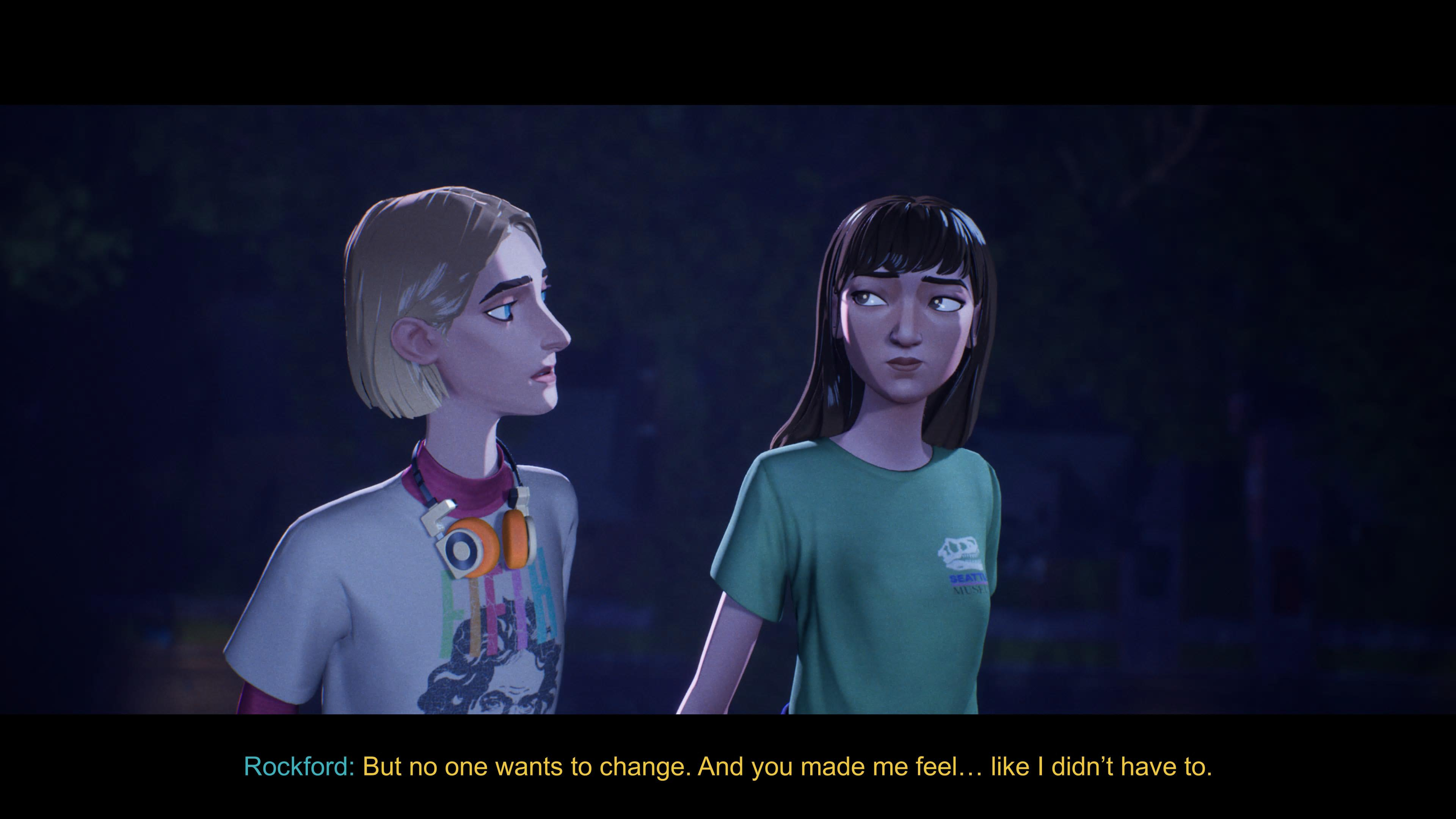
I’m going to play it again. I know this already. I’ll probably cry in the same places and maybe some new ones. I’ll probably sit with the ending a little longer the second time, now that I know it’s coming.
There’s something worth sitting with in a story about three people who love each other trying to make one more good memory before they have to go. Something that asks, quietly but insistently: are you paying attention to the people you’re with, right now, before this particular version of your life ends?
Mixtape asked me that. I’m still working on the answer.