
MILD SPOILER WARNING: I talk about a certain sequence in the first hour of the film. While it shouldn’t be unknown to anyone who has heard of the Odyssey, I place this warning here in case you want to go completely blind to see this film.
The main beats of The Odyssey are probably common knowledge to anybody with a basic understanding of the classics of literature. Going to see it in theaters is a bit like watching The Passion of the Christ, or Romeo and Juliet, or Exodus: Gods and Kings.
Point being: we already know what happens in this movie. We have a good understanding of the perils Odysseus faces. We know how it ends.
I knew Odysseus and his crew would get trapped in a cave with the Cyclops. I knew they would try many things until they had the idea of blinding him. I even knew, at a more visceral level, that the Cyclops would scream in pain when being blinded.
Nothing could prepare me, however, for actually hearing that scream.
This being is supposed to instill fear in me, much like it does on Odysseus’ men. If this was told your run-of-the-mill filmmaker, Cyclops being blinded would be one more star in Odysseus’ collection of trickster antics.
Then why do I actually feel pity for this being?
As the Cyclops’ unfathomable cacophony of pain engulfed my movie theater, I suddenly realized: these men came to this creature’s home uninvited. They stole his food. Rather than attempting to reason with him, they took away his sight and tricked him into thinking they were sheep. As they exit the cave, Odysseus can’t help himself and shoots an arrow at the Cyclops, in what he feels is his justified vengeance for the whole ordeal.
That’s when it hit me: Odysseus isn’t the hero of this story. And Nolan wisely never sets him out to be one in the first place.
I wondered how Christopher Nolan would bring the quintessential epic to the silver screen. Would he take the same approach as Troy (otherwise known as “the one with Brad Pitt”), excising all mythological elements and forcing himself to change so much of the original story that it is barely recognizable, or would he fully embrace the fantasy, depicting gods wrestling with the implications of the Trojan War? The former gives the story a more tangible, grounded, visceral feel, but strips it of most of what constitutes its essence. The latter is more faithful, but risks losing relatability and verisimilitude.
Nolan somehow achieved both. Greek gods do appear, but they feel properly complex as symbols for our deepest fears and uncomfortable truths (particularly Athena, with a certain twist regarding her I won’t spoil here but that grounds a lot of Greek mythology into our reality).
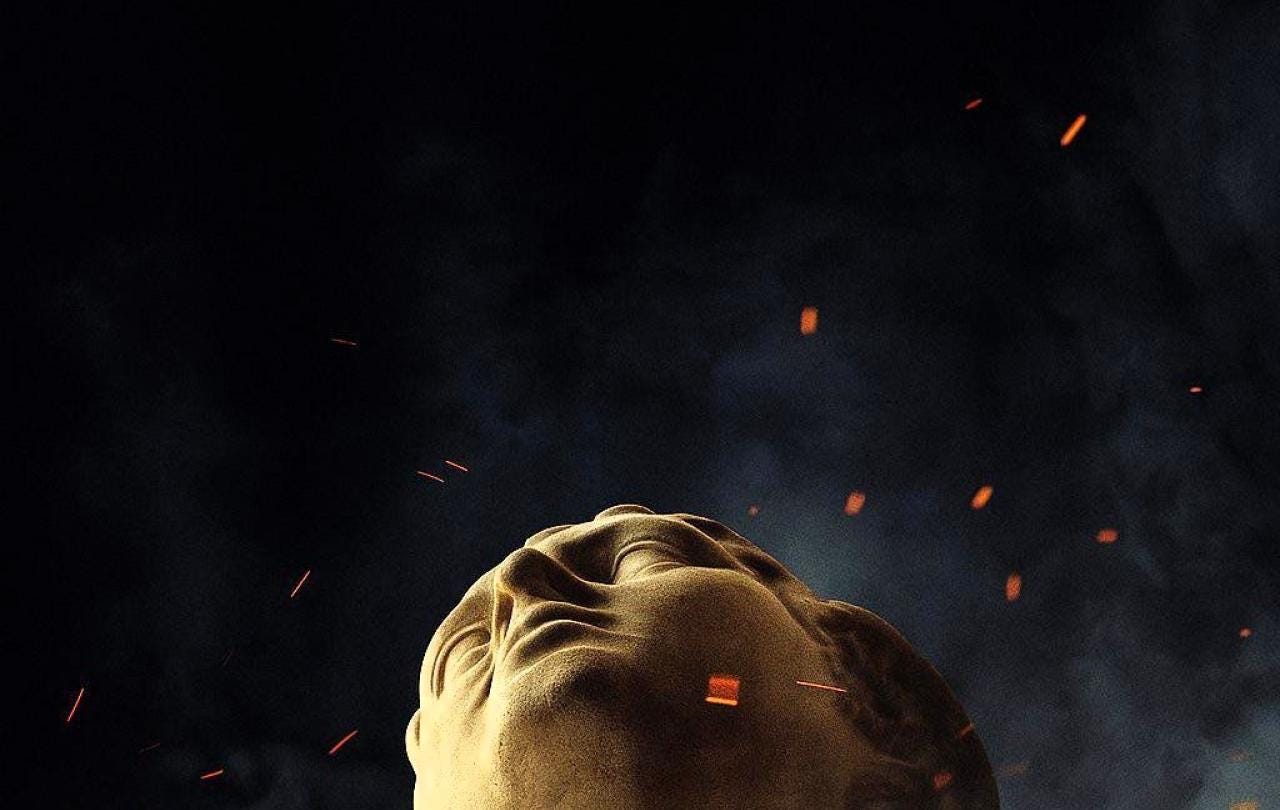
I have no idea how much of this film was achieved practically as opposed to digitally, but I was utterly convinced of what I was seeing, every single step of the way. In an age where the MCU has made photorealistic but soulless CGI commonplace, The Odyssey feels like a much overdue return to form for the art of filmmaking.
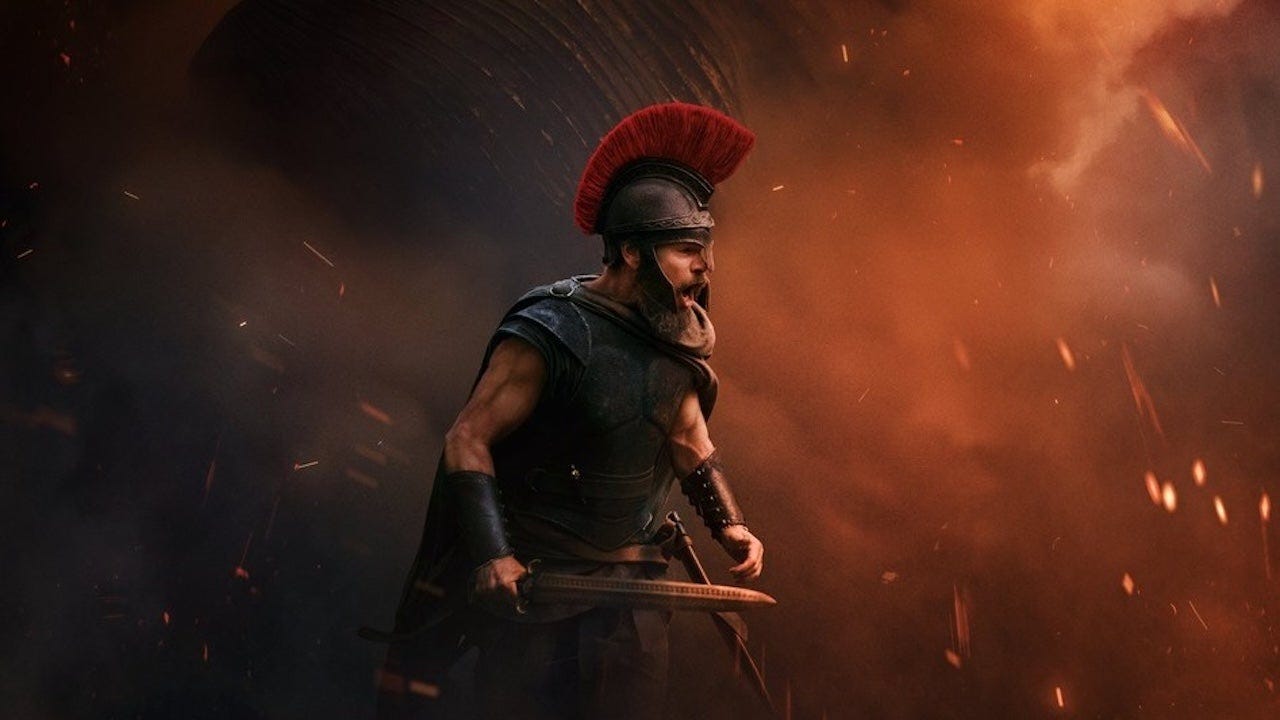
I had my doubts about Matt Damon as Odysseus. He seemed to lack a sense of poise, wisdom and serenity I associated with the Greek hero. I’m glad to say I was mistaken; Nolan went for a much more complex and human approach to the character. He is warm and inviting, but can also be contradictory, impulsive and even cruel. He is hard to understand, even for himself. He properly channels the first line of Emily Wilson’s translation of The Odyssey: “Tell me about a complicated man.”
The sound design in this film is majestic. Nolan has always had this obsession with letting sound and music intertwine more and more in his movies until they become virtually interchangeable. He continues this approach here, with diegetic elements like Odysseus’ bowstring feeing into Ludwig Göransson’s score and vice versa. While Göransson purposefully avoided relying on percussion for his score in Oppenheimer, he jumps into the opposite side of the spectrum here, with his collection of rumbling drums sending shivers down my spine as the movie theater’s speakers trembled and roared.
On the more controversial elements, like casting choices and American accents, this always seemed to me like a rather silly discourse. I remember Milos Forman had his actors speak with their natural accents in Amadeus because he wanted them to focus on the strength of their acting as opposed to an arbitrary sense of sounding “genuine”. Nolan does something very similar here. The multi-ethnic nature of the cast, as well as the modern variations to their speech, cements this story as one that’s as relevant and important today as it was to Ancient Greece all those years ago.
And I think that’s the main triumph of Nolan’s The Odyssey: it makes us realize why Odysseus’ journey is so important, so exquisite in its complexity, so poignant in its implications. Wolfgang Petersen attempted something akin to this when releasing the Director’s Cut of Troy, giving a lot more screen time to the plundering of the titular city, even showing the consequences of unleashing an army devoid of humanity by ten long years of pointless struggle into a mostly innocent populace.
The thing is Petersen showed the what, but never reflected on the why. Nolan puts the why front and center, and that is why The Odyssey will most likely remain on my mind, as the bards’ songs did in their travels, for years and years to come.