


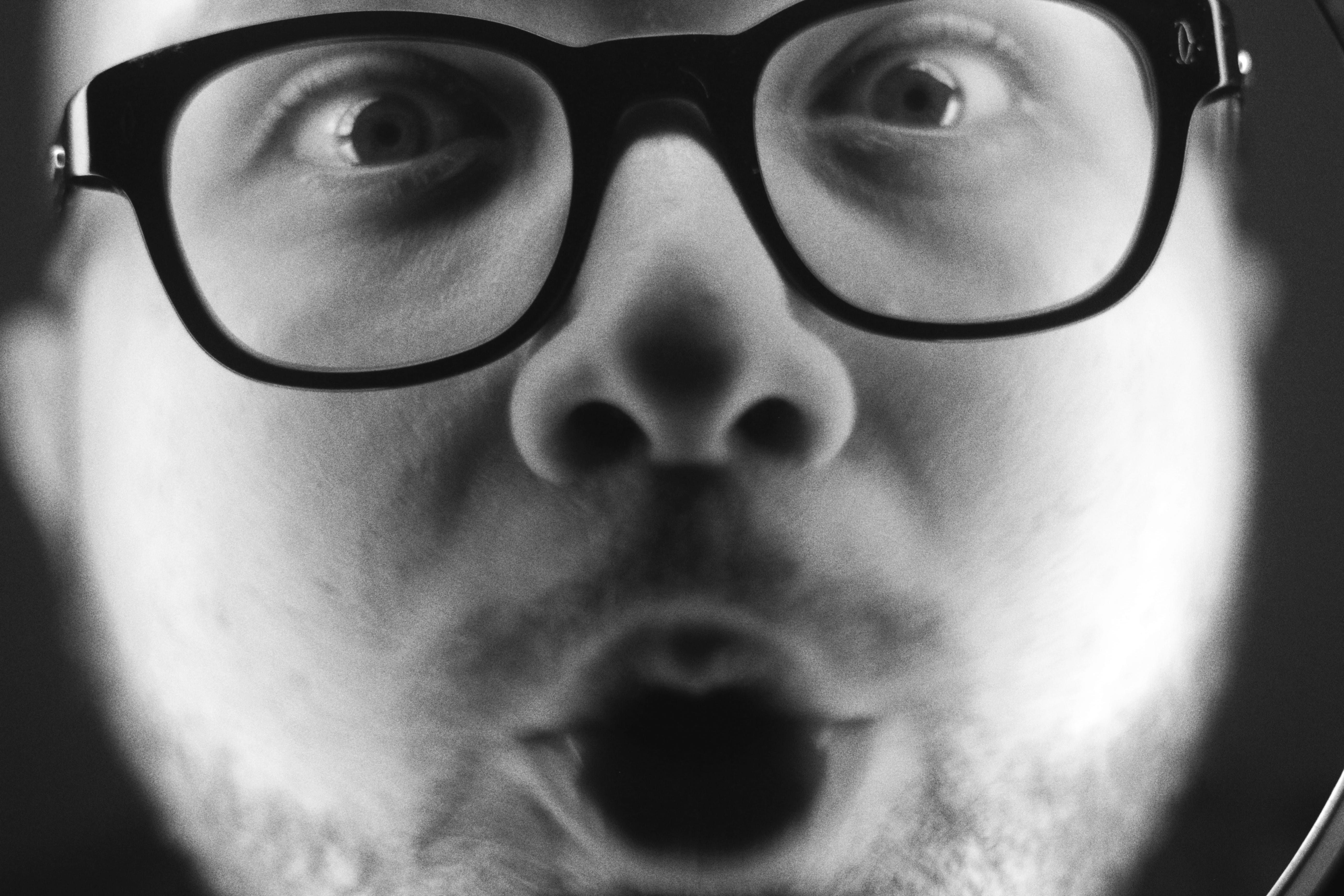
Note: this article was originally written in Spanish. I love opportunities to practice my English writing skills, and translation is in itself an act that requires interpretation and/or artistic license, so the opportunity to explore my thoughts in another language sounds too appealing to pass up.
And, since we live in an era where this sort of thing needs to be said: no, I did not use ChatGPT or any other LLM to write this piece.
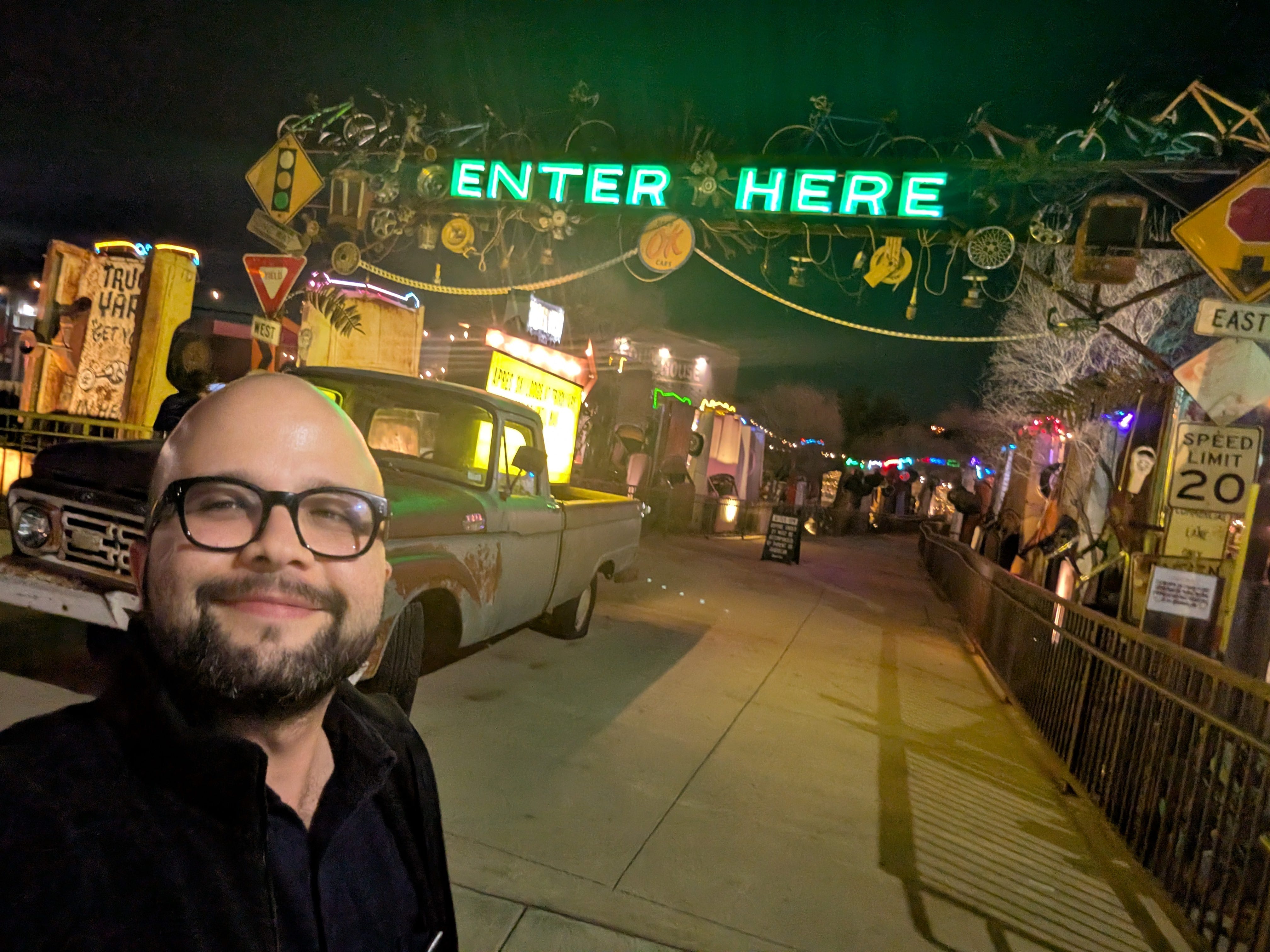
I just returned from a trip that, a couple of months ago, would have been impossible to dream about, let alone believing could ever happen. In one of its ever present plot twists, life gave me the opportunity, after years of being used to work remotely, to share a week of physical presence with my new design team.
We went to an onsite event in Texas, where I could remember what it was like to feel connected to others in all sorts of non-verbal ways, how promises are tacitly built within spaces filled with shared laughs, how a certain lightness of being is achieved when you don’t take life so seriously.
Upon returning home, chatting with several of my trip buddies (who’ve also become part of my day-to-day life), one of them said something to me that hit me in unexpected ways:
“Thank you for bringing joy to everything you do.”
Allow me to explain:
Throughout my life, the compliments I’ve received have gravitated towards the more silent and taciturn parts of me. Phrases like:
“Thank you for listening to me.”
“Thank you for your advice.”
“Thank you for being so understanding.”
They had become so common that I inevitably formed a self-image, a concept of who I am, of my identity, like some sort of archetype. And the thing about archetypes is they end up conditioning our behavior.
Yes, there’s been times where I make decisions or do things because “that’s what I would normally do”, because they align with a profile of myself that I have inadvertently perpetuated. In the same vein, I’ve stopped myself from doing things because they don’t go hand in hand with that mental stereotype.
Because “that’s not me.”
Among the things I didn’t allow myself to do or feel, perhaps the most significant one is joy. It’s been tough for me to adopt the idea of just smiling and looking at the funnier side of life because the version of Nando I’d built up to that point had to be “above” those things.
I had to be a grown up. Someone “serious”.
Because of all this, hearing someone say that I bring joy to what I do took me by surprise.
Truth be told, no one had ever told me that before.
The inner child
I recently read that one of the blessings of having children, within all the effort that’s required, is that it allows parents to resume activities they would have otherwise never experienced again. A sincere laugh when playing hide and seek. The fulfilling sensation of building a castle with Legos. The innocence inherent to role-playing as superheroes.
Even though I’m not planning on having children any time soon, I’ve made a conscious effort to reconnect with my inner child, to look for those moments of fun I had to say goodbye to when time forced me to grow up.
When I received this compliment about my joy, I suddenly realized that, for a whole week, I didn’t stop myself in any way. I didn’t place obstacles in my way under the pretense of expectations about how I should behave. I didn’t deny myself the opportunity to live.
I simply… was. I felt what I had to feel. I laughed and smiled and enjoyed all I wanted to enjoy.
I was happy.
Much more than I once thought I could be.
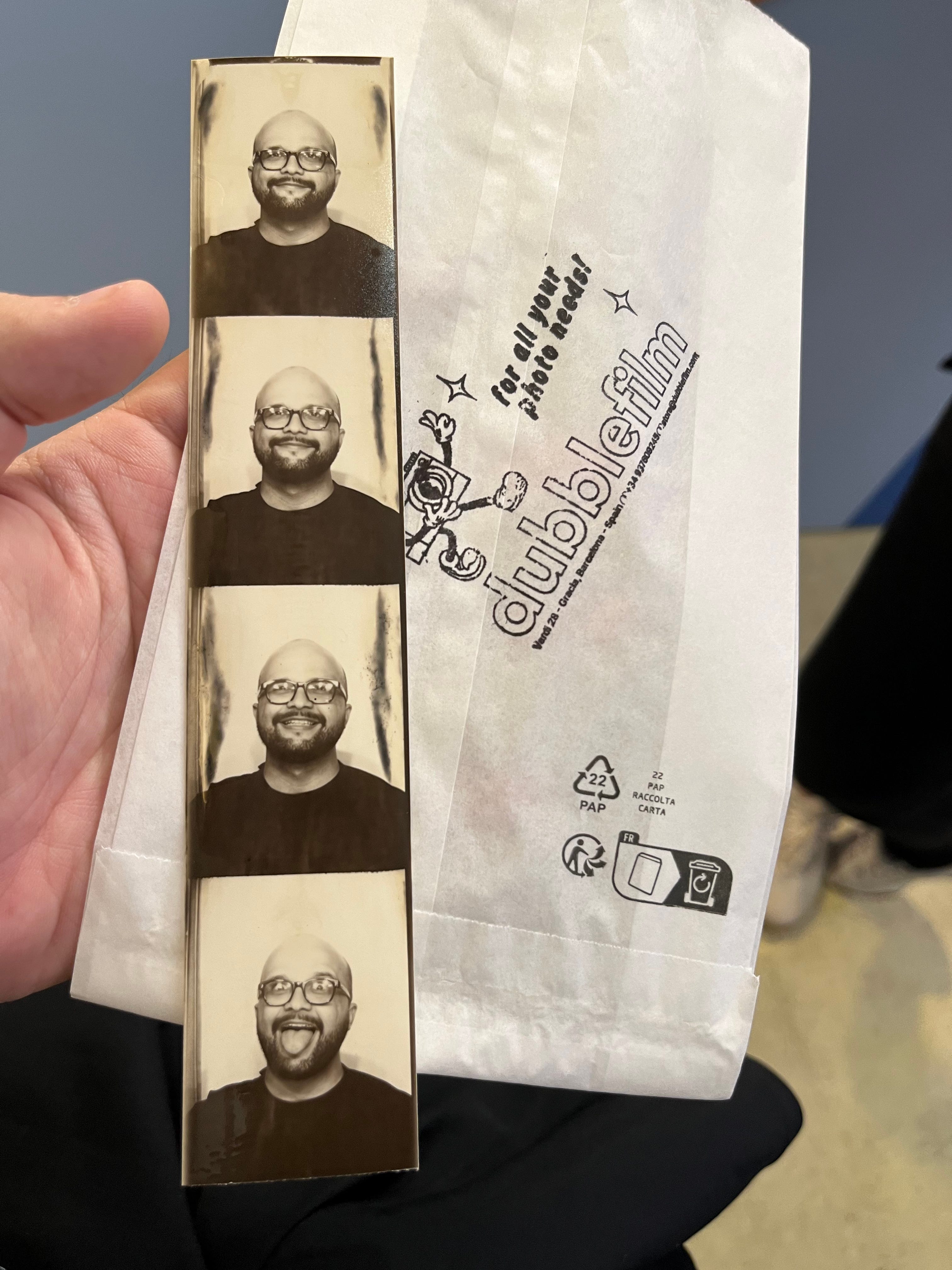
Let’s smile at life
A few months ago, I wrote the following as a Whatsapp status: Life is absurd.
My main motivation came from having read The Myth of Sisyphus, by Albert Camus.
I’m sure most of us know about Sisyphus, but for the sake of context: in Greek mythology, Sisyphus was condemned to push a heavy boulder up a hill, to its tallest point. Whenever he managed to achieve this objective, the boulder rolled back down to its starting point, forcing Sisyphus to push it again, and again… for eternity. It alludes to the futile nature of existence. That eternal question: what’s the point of all this?
The short version of Camus’ answer is that, if life has no meaning, if it is possible to call it absurd, then it must also be possible, even imperative, to embrace that absurd nature and live life happily.
In his own words:
“Happiness and the absurd are two sons of the same earth. They are inseparable.
(…)
The struggle itself toward the heights is enough to fill a man's heart. One must imagine Sisyphus happy.”
I take it upon myself, then, to be like Sisyphus: happy within the absurd.
I take it upon myself to accept that joy that I, serendipitously, could embody in this recent journey through Texan lands, when I allowed myself to let go.
I take it upon myself to follow the spirit of that timeless quote by Chaplin:
"Life is a tragedy when seen in close-up, but a comedy in long-shot."